


Joint health is the basis of vitality and an active lifestyle.A painful, inflamed, swollen knee joint is a sign of the development of a pathological process in the tissues of the body.
The causes of such disorders are diseases of the joints, which occur as a result of the destruction of cartilage tissue, narrowing of the joint gap and deformation of the bones.Inflammation and limitation of movement in the joint most often occurs as a result of osteoarthritis.Below you will find out what kind of disease it is, how and how to relieve pain and swelling, and why arthrosis is dangerous.
Features and causes
Arthrosis is considered a degenerative process in the cartilage tissue of the joint, accompanied by destruction of the bone surface, deformation and disruption of the functioning of the affected joint.
The development of the pathology is preceded by changes in the cartilage tissue cells, which thin out, lose their elasticity, crack and stop performing their functions - cushioning, movement, rotation, lifting, etc.
Osteoarthritis of the knee joint provokes severe pain, limits the functionality of the joint and leads to serious destruction of the cartilage tissue and deformation of the joint.
Most often, this disease affects women and men over 50 years of age, but a rapid decrease in the age of patients with a similar diagnosis is observed.
Unlike gout or arthritis, which develop against the background of impaired metabolic functions of the body, arthrosis of the knee occurs due to joint wear, injuries, autoimmune diseases, prolonged immobility, increased physical activity and excess weight.
attention!The long-term progression of the disease and the lack of comprehensive treatment of deforming arthrosis of the knee joint and gonarthrosis provoke serious complications - paralysis and disability.
Symptoms and stages of the disease
In order to prevent the irreversible consequences of arthrosis of the knee joint, it is necessary to diagnose and treat the pathology in a timely manner.
The disease progresses over many years, sothe first symptoms of arthrosis may be barely noticeable– pain in the knee, bothersome with physical exertion, morning heaviness in the legs and stiffness.
In the later period of arthrosis (stage 2), the symptoms manifest themselves more clearly - crunching and cracking are heard when the joint moves,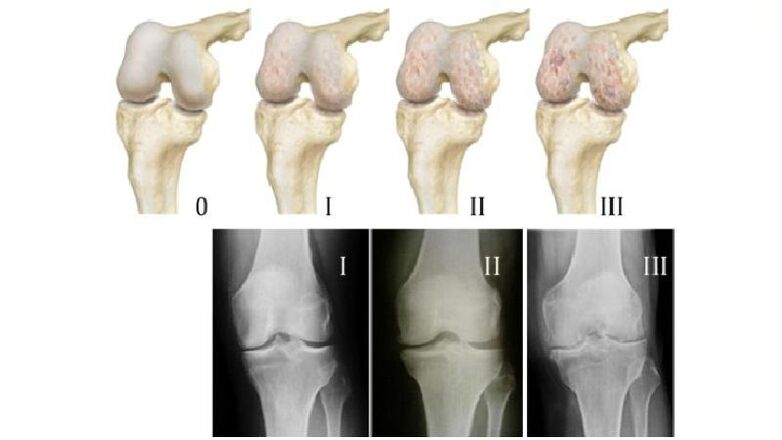 which accompany the pain, fluid accumulates in the joint capsule (effusion), the functionality of the knee joint noticeably decreases and the deformity becomes noticeable with the naked eye.
The third stage of the pathology is characterized by severe or complete destruction of cartilage tissue, limited mobility and pain that does not stop at rest.The change in gait becomes noticeable due to the deformation of the knee joints and a time dependence can be observed.
The fourth stage is a completely deformed and non-functioning knee joint in which the joint space is missing, the cartilage is destroyed and the blood vessels are compressed.In this form, the knee stops bending and extending and the person loses his ability to work.
Experts recommend seeking help at the first sign of knee discomfort!
It often happens that the patient endures mild symptoms of the pathology for a long time, worsening his situation every day.This health condition can last for many years.
Delay in treatment in the initial stage of the disease often causes chronic arthrosis of the knee joint.
The clinical picture of this process can be similar to other problems associated with changes in cartilage and bone tissue that provoke severe pain, swelling and inflammation.X-rays of the knee joints, as well as ultrasound, MRI and CT help to establish the true cause of such symptoms.
After the diagnosis, the attending physician will determine which course of treatment to choose.In order to cure arthrosis once and for all or significantly reduce the costs of progressive pathology, you need to find out which doctor to contact.
reference.In case of arthrosis of the knee joint, the treatment is carried out by a rheumatologist - a specialist in conservative treatment of inflammatory and destructive processes in the joints.
If you are not sure about the nature of your problem, it is better to consult a therapist.
Treatment regimen
Joint diseases require long-term recovery, as disorders occur in the cells of bone and cartilage tissue.In addition to time, their treatment will require a combination of different principles of therapy: physiotherapy, drugs, exercise therapy, manual and massage techniques, reflexology.
In some cases, surgery may be required.We will talk about this below.
Conservative therapy
This method involves taking drugs to relieve inflammation and pain.They can be used in the form of tablets, ointments, gels, intravenous and intramuscular injections.
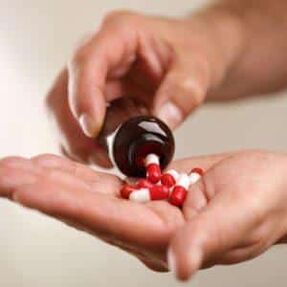
attention!It is important to understand that only a doctor can prescribe drugs based on the general clinical picture of the disease.Self-medication is prohibited!
Treatment with anti-inflammatory drugs helps relieve pain, relieve swelling and tissue inflammation.
Hormones and corticosteroids help repair the joint.
Preparations containing calcium for arthrosis of the knee joint accelerate the production of new cells from cartilage and bone tissue.What is best for osteoarthritis of the knee joint depends on the specific clinical picture.The main difference between the drugs is their composition.
The decision of which drug to choose for the treatment of joints is made based on the doctor's recommendations.
Physiotherapy treatment
In order to enhance the effect of the drugs, the patient is prescribed physiotherapy - electrophoresis, myostimulation, laser therapy, shock wave procedures.And also as an addition – reflexology and acupuncture.
Physiotherapy accelerates the healing process by restoring joint surfaces at the cellular level.
Thanks to the procedures, blood circulation and lymphatic drainage are enhanced, swelling is removed, muscles are relaxed and inflammation is alleviated.
Surgical treatment and rehabilitation
In the event that the articular cartilage is maximally destroyed and the body cannot cope with its regeneration, surgical treatment is necessary.
Partial resection is possible - removal of bone growths and correction of deformity;total joint prosthetics;replacement of one of the articulation elements - implantation of a metal pin.
Endoprosthesis helps to completely get rid of the manifestations of the disease, but requires a long recovery after surgery and serious material investments.That is why this method is used in the most dangerous clinical cases of arthrosis.
During the recovery period after surgical treatment, the patient is explained how to live with arthrosis of the knee joint and how to use a cane correctly.First timethe cane replaces the supporting function of the sick leg.It is held in the arm of the same name with the operated leg and during movement is placed next to the limping limb for support and further propulsion.
Traditional medicine
As an auxiliary anti-inflammatory agent for the initial stage of arthrosis of the knee joint, it is worth studying the treatment methods of traditional medicine.
The effectiveness of traditional therapy consists in the use of biologically active plant substances that have an analgesic, disinfecting and anti-inflammatory effect.
However, there are a number of limitations to the use of traditional recipes.They are associated with the individual characteristics of the body, allergies and the rapid progression of the underlying disease.
attention!The use of compresses, decoctions and infusions is possible only after consulting a doctor.
The most popular recipes for folk remedies for the treatment of arthrosis of the knee joints at home:
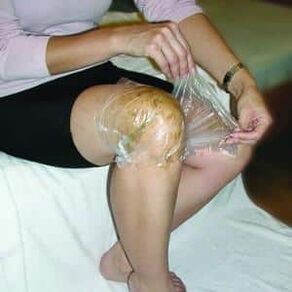
- a compress of burdock or cabbage leaves and oil (scald 5-6 leaves with boiling water, lubricate the inflamed joint with castor oil or another unrefined vegetable, apply the prepared leaves to the knee, wrap in a warm towel for 3-6 hours);
- horseradish compress (grate horseradish root on a fine grater, put the pulp in a thick cloth, wrap the joint, hold for several hours);
- ointment from animal fat (pork, bear, badger) is used to rub a sore knee - it is applied with massaging movements, then the joint is wrapped with a warm towel overnight;
- camphor ointment (mix 3 grams of camphor with 150 grams of vodka, turpentine and vegetable oil, leave for 24 hours, then use as a rub at night every day);
- herbal infusion of nettle, willow leaves, birch and calendula - 1 tablespoon.mix a spoonful of each type of leaf with 1 liter of hot water, the infusion will be ready in 2 hours (usage: drink half a cup 3-4 times a day half an hour before meals);
- cranberry infusion - 2 tablespoons.spoons of blueberry leaves are poured with 0.5 liters of boiling water for 1-2 hours (use: drink 150 ml before meals during the day);
- therapeutic baths with salt (fill the bath with hot water, add 1 kg of sea salt, 3-6 pine branches, 2 tablespoons of honey, 1 teaspoon of turpentine, 2 tablespoons of Jerusalem artichoke, take a bath for 20 minutes for a course of 10 days).
If side effects occur, you should stop the procedure and consult a doctor.
Massage and gymnastics
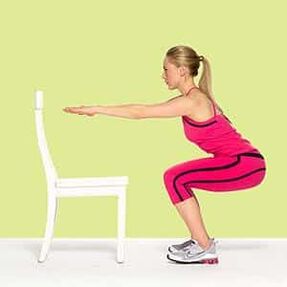
Therapeutic exercises, massage, manual therapy are indispensable means of restoring the damaged cartilage.
These products are widely distributed due to their proven effectiveness.
The principle of their action is to strengthen blood circulation and the natural processes of cell regeneration.
Gymnastics and massage increase immunity, strengthen muscles, ligaments, tendons and restore the functionality of knee joints.
Exercises are effective both for the prevention of arthritis and arthrosis of the knee joints in adults and young people, as well as for the treatment of illness or recovery after surgery.
diet
It is no secret that the tissue cells of all organs are built from nutrients entering the body from food, water and air.All a person can do to maintain their health is to eat right and exercise.
Note.As a rule, arthrosis develops against the background of a nutritional deficiency with a general reduction in food intake or consumption of low-quality foods that lack vitamins and minerals.
Foods that you should exclude from your diet to avoid destructive processes in the body:
- saturated fat (transgenic, animal);
- processed (refined) foods;
- products containing sugar, salt;
- smoked meats and preserves;
- coffee, tea, carbonated drinks;
- fried foods;
- fatty meat;
- alcohol.
The daily diet should include:
- lean meat and fish;
- coconut oil, unrefined vegetable oils (olive, linseed, sesame, etc.);
- fresh vegetables and fruits (with the exception of onions, pickled fruits and berries, sorrel, tomatoes, sweet peppers - they should be consumed in limited quantities or removed completely);
- fermented milk products;
- freshly squeezed juices;
- nuts and seeds.
It is important not to overeat!Even healthy foods can be harmful if consumed indefinitely.Therefore, eat strictly according to hunger and in small portions.
How to avoid arthrosis
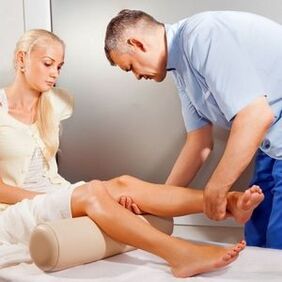
Since arthrosis is a destruction of the knee joints and, as a rule, it is difficult to treat on its own without surgery, the question arises how to prevent the disease and protect the joints from destruction.
First of all, it is important to understand that there is no such thing as a 100% healthy person.This is the modern objective reality.Our health is influenced by our environment even before we are born through our mother's body.
Therefore, even in the absence of diseases of the musculoskeletal system, we must not forget the precautions: proper nutrition and physical activity.
The principles of diet and exercise are described above.
Bad habits such as overeating, alcoholism, drug addiction and smoking should also be eradicated from your life, as toxic components tend to destroy the cells of internal organs and bones.
It is important not to forget about quality rest - a good sleep that lasts at least 7 hours a day.
Wearing the right shoes - the right size, with shock-absorbing soles and orthotics - helps reduce the likelihood of foot disease.
Reviews
"I suffered from knee pain for a long time, postponing the visit to a rheumatologist until later. When I visited the doctor, I found out that I had arthrosis and it was progressing quickly. I was scared because I did not understand how to live with such a serious health limitation if you are only 50 years old and travel often. The treatment consisted of pills, exercises and a proper diet. A year later there was a whole relief, but now for life you have to be active every day andeat only the right foods.
"4 years ago I hurt my knee, the pain subsided, I did not go to the doctor. Years later, the joint started to hurt, very bad, and an MRI showed arthrosis and damage to the meniscus. I did not think that I would face such a diagnosis at such a young age (I am 30 years old). They prescribed a course of injections for 10 days, then physiotherapy, after which I wore a bandage several timesmonths, and I am still doing paraffin treatments, but he is still not fully recovered, do not neglect the treatment.
Conclusion
Almost every disease of the musculoskeletal system manifests itself in the first stages of the disease in the same way - pain, impaired functionality, swelling, redness, etc.Only a qualified specialist can determine the true cause of the disease.
Do not postpone the diagnosis of the joint for later, because the development of degenerative changes is fraught with damage.Treatment of joints requires a lot of time, patience and an integrated approach.